Ants Projects Hub ← All projects

Beta

Games Hub

BetaWINLNXLatest: v0.3.1

Games

A small collection of desktop games for Linux and Windows, in one window sized to sit beside whatever you are actually working on.

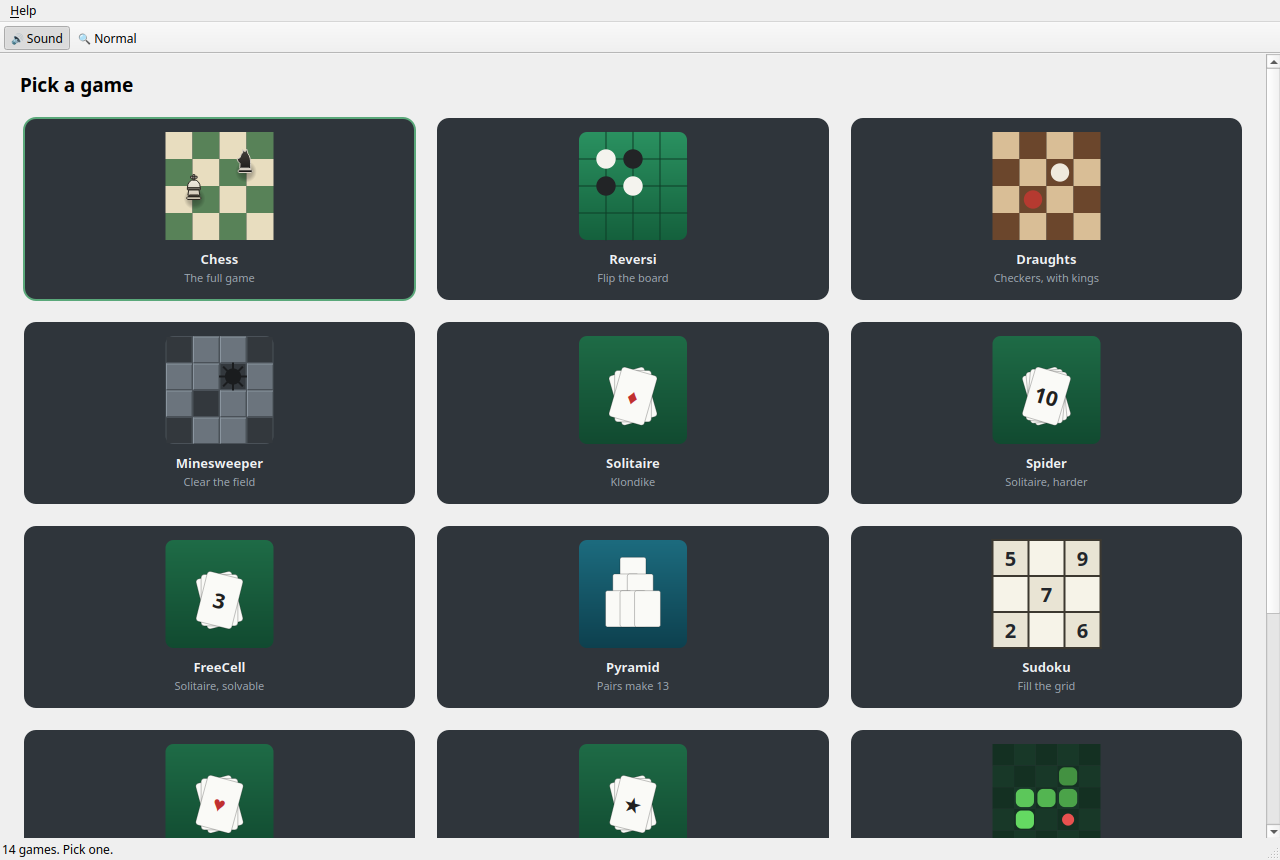
the games hub

Current version 0.3.1 — see the changelog for what changed and the roadmap for what is coming.

Read the full guideShow less

Download

One file, and nothing to install first. Each download brings everything it needs with it, so it runs on a computer that has never had anything to do with this sort of thing.

Your system File How to run it
Linux GamesHub-<version>-x86_64.AppImage Give it permission to run (right-click → PropertiesPermissionsAllow executing, or chmod +x in a terminal), then double-click it
Windows GamesHub-<version>-windows-x64.zip Unzip it anywhere you like and run gameshub.exe inside

Both are on the releases page.

Two things worth knowing before you download:

  • The Linux file needs a reasonably recent Linux. Ubuntu 24.04, Fedora 40, Debian 13, Tumbleweed and anything newer are all fine; older versions will refuse to start it. (The technical reason is a system library called glibc, which has to be 2.39 or newer.) If yours is older, you can build it yourself — see the end of this file.
  • Windows will warn you the first time. You will see a blue box saying "Windows protected your PC". That is not a sign anything is wrong with the download: it appears for any program whose author has not paid for a certificate to stamp it with. Click More info, then Run anyway.

The games

Game What it is
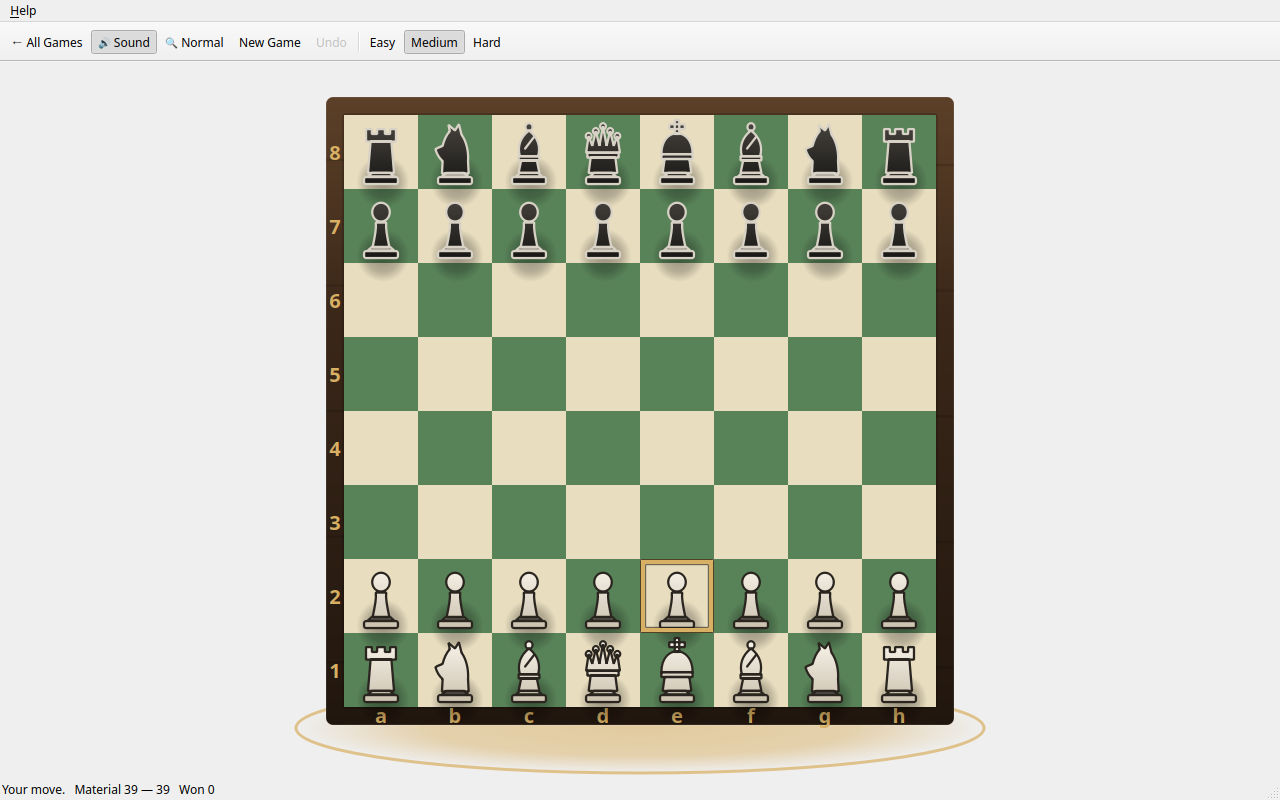
Chess The full game against the computer — castling, en passant, promotion and every draw rule, at three strengths.
Reversi The classic disc-flipping board game, against the computer, with three difficulty levels.
Draughts Checkers against the computer — compulsory captures, multi-jumps and kings.
Minesweeper Beginner, Intermediate and Expert fields.
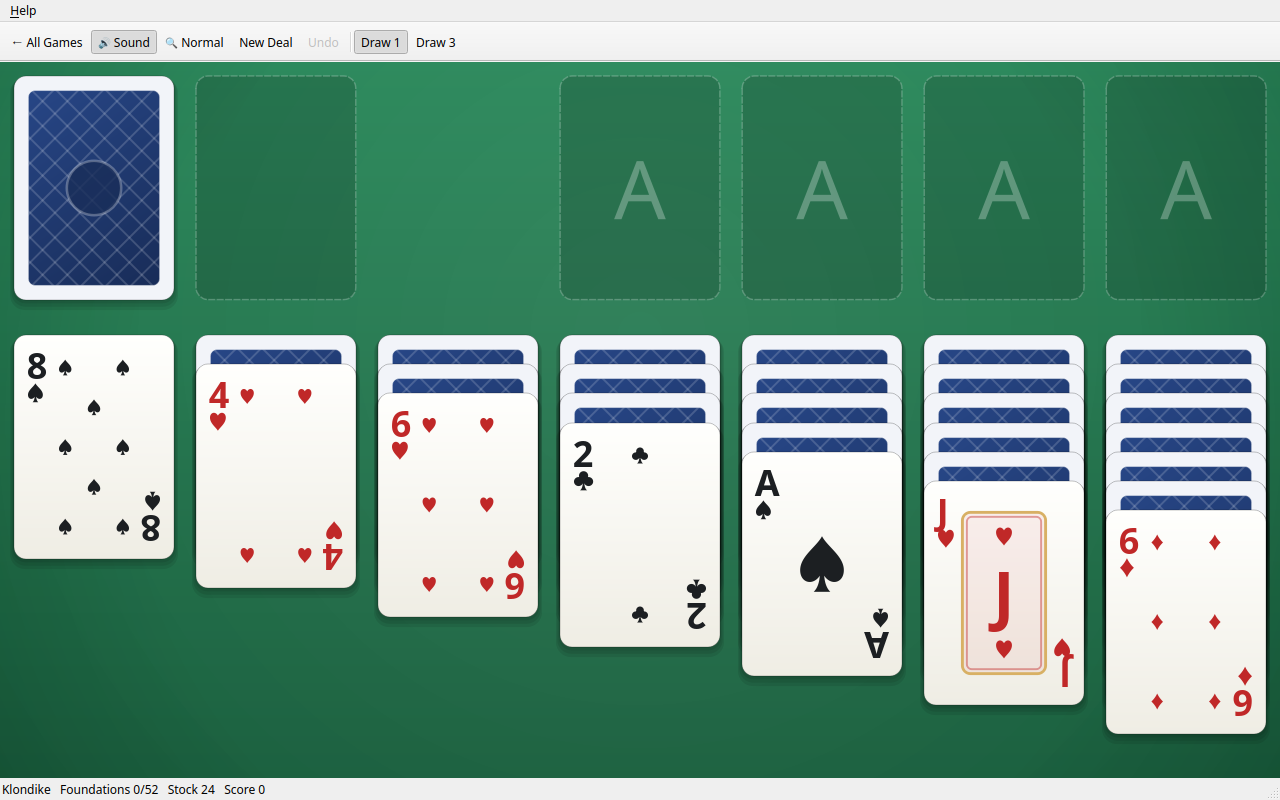
Solitaire Klondike, draw one or draw three.
Spider Spider solitaire in one, two or four suits.
FreeCell Four free cells, everything face up, almost always solvable.
Pyramid Clear the pyramid by taking pairs that add to 13.
Sudoku Generated puzzles at three difficulties, with pencil marks.
Hearts Four-handed Hearts against three computer players, to 100.
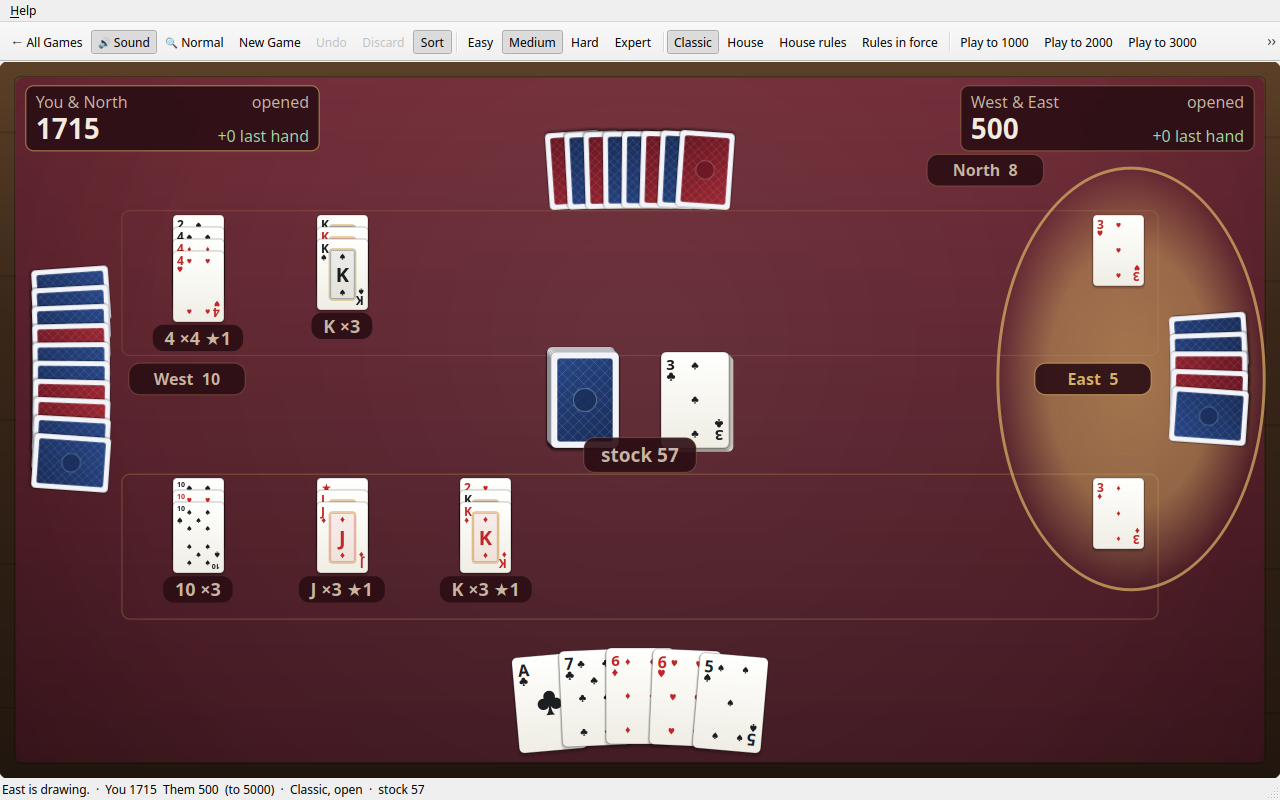
Canasta Partnership Canasta, two against two, with melds, wild cards, red threes and a freezing discard pile. Classic rules, plus a house set you can edit.
Snake Eat, grow, and don't run into anything.
2048 Slide the tiles, merge the numbers.
Pinball One table, three balls, two flippers.

Pick a game from the grid; ← All Games (or Esc) goes back. Each game puts its own buttons — New Game, Undo, difficulty — on the toolbar beside it, and the Sound switch at the right mutes the lot.

Best scores are kept between sessions: games won at Chess and Draughts, discs won at each Reversi level, fastest Minesweeper and Sudoku clears, top Klondike score, fewest Spider and FreeCell moves, most Pyramid pairs cleared, lowest winning Hearts total, highest winning Canasta score, and the Snake, 2048 and Pinball high scores.

The window remembers itself. Size and position are kept for each game separately as well as for the tile menu, so a game you like large opens large and the menu comes back where you left it.

Ten of the games pick up where you left off. Close the window in the middle of one and it comes back exactly as you left it — Chess, Canasta, Draughts, Reversi, Minesweeper, 2048, and all four card games (Klondike, Spider, FreeCell and Pyramid). Canasta brings back the whole table: every hand, the melds, the pile, the stock, the scores and the rules in force. Chess brings back the board and the moves that led to it, so Undo still works.

There is nothing to press and no save button — it just happens. Starting a fresh game is what New Game is for. Finish a game and nothing is kept, so you never come back to a board you have already won.

The four that do not do this yet are Hearts, Sudoku, Snake and Pinball.

Minesweeper and Sudoku can be paused, which stops the clock and covers the board, so walking away costs you nothing. Snake has its own pause on the space bar.

Playing

Chess. You are White and move first. Click a piece to select it — the squares it can reach show a dot, and the ones it can capture show a ring. Click one to move. A pawn reaching the far rank asks which piece it should become. A king in check is lit in red, and the rule that a move must get you out of check is enforced, so a piece that cannot help simply offers no moves. Undo takes back your move and the computer's reply together. All four ways a game can end in a draw are spotted and named for you when they happen — stalemate, the fifty-move rule, the same position three times over, and too few pieces left for anyone to win.

Reversi. You are Black and move first. Click a square with a faint dot on it. Your move must trap a line of the computer's discs between the square you click and one of your own, and every disc trapped flips to your colour. If you have no legal move your turn is skipped automatically — that is the rule, not a bug. Undo rewinds your move and the computer's reply.

Minesweeper. Left click digs, right click plants a flag. A number says how many mines touch that square. Clicking a number you have fully flagged clears its remaining neighbours in one go. The first click is always safe.

Solitaire (Klondike). Drag cards to build the four foundations up from Ace to King in one suit. On the table, build downwards in alternating colours; only a King may start an empty column. Double-click a card to send it to a foundation. Click the face-down pile to deal.

Spider. Build downwards in each column regardless of suit, but only a run of one suit moves as a unit — the yellow outline shows how much will lift. Complete King-down-to-Ace in one suit and it is removed. Clear all eight runs to win. Click the corner stack to deal another row; every column must be non-empty first. Start with 1 Suit.

Hearts. Avoid taking hearts (1 point each) and the queen of spades (13). Lowest score when someone reaches 100 wins. Choose three cards to pass, then click Pass 3 Cards. Follow the led suit if you can — cards you may not play are dimmed. Take every heart and the queen and you shoot the moon: 26 points to everyone else instead of you.

Canasta. You and North play West and East. Click cards in your hand to pick them up, then Meld to lay them down; three of a kind is the smallest meld and seven is a canasta. Click the stock to draw, or click the discard pile to take the whole thing — which needs two matching cards from your hand while the pile is frozen, and only one plus a wild card when it is not. Twos and jokers are wild; red threes lay themselves down for a bonus; a black three on top stops anyone taking the pile. Click the pile again to throw a card away and end your turn. Your side needs a canasta before anyone can go out.

Cards are laid down on the table, not from the toolbar: pick them up and a Lay down button appears on the felt above your hand. You can also just drag them — onto one of your own melds to add to it, onto the table to lay them down, or onto the discard pile to throw one away. You must draw before you can lay anything down. Sort keeps your hand fanned the way you would arrange it at a table: wild cards first, then aces down to threes.

A strip under the middle of the table says how much stock is left, whether the pile is frozen, and what the last player threw away, in words, until the next card replaces it.

Every meld carries a badge naming what it holds — 10 ×4 ★1 is four tens with one wild card among them. A melded card is mostly hidden by the one on top of it, so the badge is what actually says whether there is a joker in there.

Expert partner raises North — your partner — to the top level while leaving the two you are playing against wherever you set them. A partner who throws the hand away is a worse evening than a strong opponent.

Nobody above Easy feeds the table while the pile is frozen: laying a rank down is what stops the opposition ever throwing it, so a frozen pile is played for rather than built past. Opening while it is frozen lays only what the minimum asks for, and a side with a canasta closes the hand out fast against a side without one.

There are four opponent strengths. Expert counts the pack — it knows which ranks are wholly accounted for and throws those, keeps ranks back in hand as bait for the pile, takes every pile it legally can, freezes the pile when it holds the pair to reclaim it, and spends wild cards to close the hand out once it has a canasta. Pick it if you have played Canasta for years. Each level is measured against the one below it rather than merely labelled.

To add a wild card to a meld already on the table, pick the wild card and then click that meld — a joker has no rank of its own, so it has to be told where it is going.

Rules → House rules… opens every number the game plays by: the opening minimums, the canasta bonuses, what a red three is worth, and whether a canasta is really needed to go out. Six of them are the owner's family's, all off in Classic (the last is ON in Classic, since Classic is the one that freezes):

  • Nobody lays down in the first round keeps the table clear until every seat has played once, so the pile has something in it before anyone can open.
  • The pile can be part of your opening, turned off, means the meld that captures the top card counts nothing toward the minimum — so the pile can never be the thing that opens you.
  • A canasta makes its rank a safe discard stops a side taking the pile with a rank it already has a canasta in. Your own side goes on adding to that canasta as usual — the rule is about the pile, not about the meld.
  • A meld keeps more real cards than wild ones means three sixes carry two wilds and no more; the third wild waits for a fourth six.
  • The pile is frozen until your side has opened, turned off, lets a side that has not opened take the pile the same way anyone else does — one matching card and a wild. Classic Canasta freezes it, so that side needs two matching cards from hand.
  • A side with no canasta counts nothing in its favour takes that side's melds off its score, exactly like the cards left in its hands, and turns its red threes against it. Classic Canasta asks only that a side has opened, so there a side with melds and no canasta still scores positively.

Classic is never edited and is always one click away. Play to sets how long a game runs.

Changing any of this does not restart your game. A rule corrected mid-game takes effect on the hand in front of you, with the scores and the position untouched — including switching between Classic and House. Only the three numbers that shaped the deal — pack size, jokers and cards dealt — wait for the next hand, since they cannot change under cards already dealt.

Pinball. Hold Space to charge the plunger, release to launch. Z and M (or the arrow keys) work the flippers; clicking the left or right half of the table does the same. Three balls. A launch that falls short rolls back to the plunger rather than costing you a ball.

For developers

If you just want to play, you can stop here. The rest of this file is about building the games from their source code, which you only need if you are changing them, or if your Linux is too old for the download above.

Building

Needs Qt 6 (the toolkit the windows and cards are drawn with), CMake and a C++20 compiler.

cmake -S . -B build -G Ninja -DCMAKE_BUILD_TYPE=Release \
      -DCMAKE_INSTALL_PREFIX="$HOME/.local"
cmake --build build
./build/gameshub

--game <name> opens one game directly, skipping the menu:

./build/gameshub --game pinball

Installing

Adds Games to the application menu with its own icon:

cmake --install build

Set CMAKE_INSTALL_PREFIX when configuring, as above — the .desktop file records an absolute path to the binary, so passing --prefix only at install time writes a launcher pointing at the wrong place.

Tests

cd build && ctest --output-on-failure

The same pipeline CI runs can be run locally before pushing, which is worth doing because half of it is checked on a machine you do not have:

git config core.hooksPath .githooks   # once, then it runs on every push
scripts/local-ci.sh

It takes its steps from .github/workflows/ci.yml instead of repeating them, so it cannot quietly fall out of step with what GitHub actually runs. The Windows half still only runs there.

gameshub_selftest checks every game's rules with no UI: Chess's move generator counted against the published totals for four reference positions, Reversi's engine against random play, Minesweeper's first-click safety, deck integrity, twenty complete AI-versus-AI games of Hearts, eighteen of Canasta across all three strengths (with all 108 cards accounted for at every step), and a pinball ball flown round the table at every plunger strength. gameshub_uitest builds each game widget offscreen, paints it, and opens every one through the hub. Neither needs a display.

Licence

In plain terms: these games are free. Play them, copy them, change them, give them away. Nobody owns the rules to Chess or Solitaire, and every line of code here was written from scratch rather than borrowed.

The licence is MIT — see LICENSE. The rest of this section is the paperwork that goes with it, and matters only if you redistribute the games.

The app links Qt 6 dynamically, which Qt offers under LGPL-3.0 (or LGPL-2.1 with the Qt Company exception). Qt is not modified here, and a source checkout bundles nothing — but the downloads above do carry Qt, since that is what lets them run without it installed. Each one ships the LGPL and GPL texts alongside THIRD-PARTY.md, which says Qt is unmodified and points at the matching sources.

A release about the checks rather than the games: nothing you can see has changed, but a broken download can no longer reach the releases page.

Fixed

  • The release checks now start the downloaded build, not just ask it its version (GHUB-0026) Both downloads are opened and run headless before they are published, and the check passes only if the game is still running afterwards with no error box on screen. The old check asked the file for its version number, which it answers before the graphics layer is even loaded — so a download that could not open a window would have passed. Both downloads now also carry the offscreen display plugin the check runs on.

All releases on GitHub →